
※This article is a sister piece to the main analysis, "Considering Stranger's Sun (Revised)." The main article reads the song from the Western side, with Camus's The Stranger as its axis; this one reads it from the Eastern side, with Japanese mythology as its axis. If you haven't read it yet, please start with the main article.
Introduction — From a Single Comment
Thank you, as always, for reading this blog.
After I finished writing the main analysis, one remark in the MV's comment section caught my eye. My heartfelt thanks to the person who gave me this starting point.
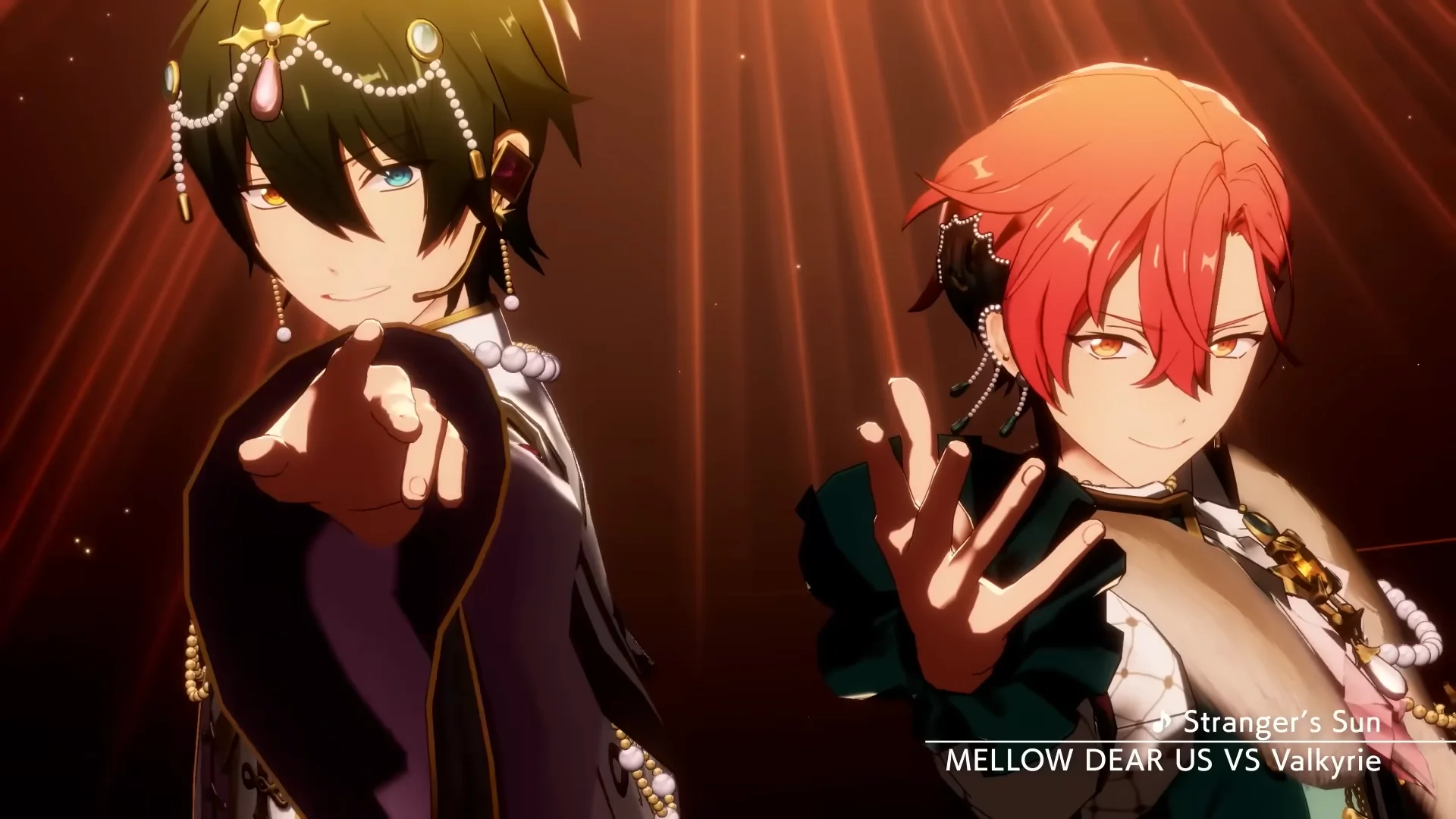
The comment pointed out, in essence, that "Mika's costume looks like Amaterasu Omikami."
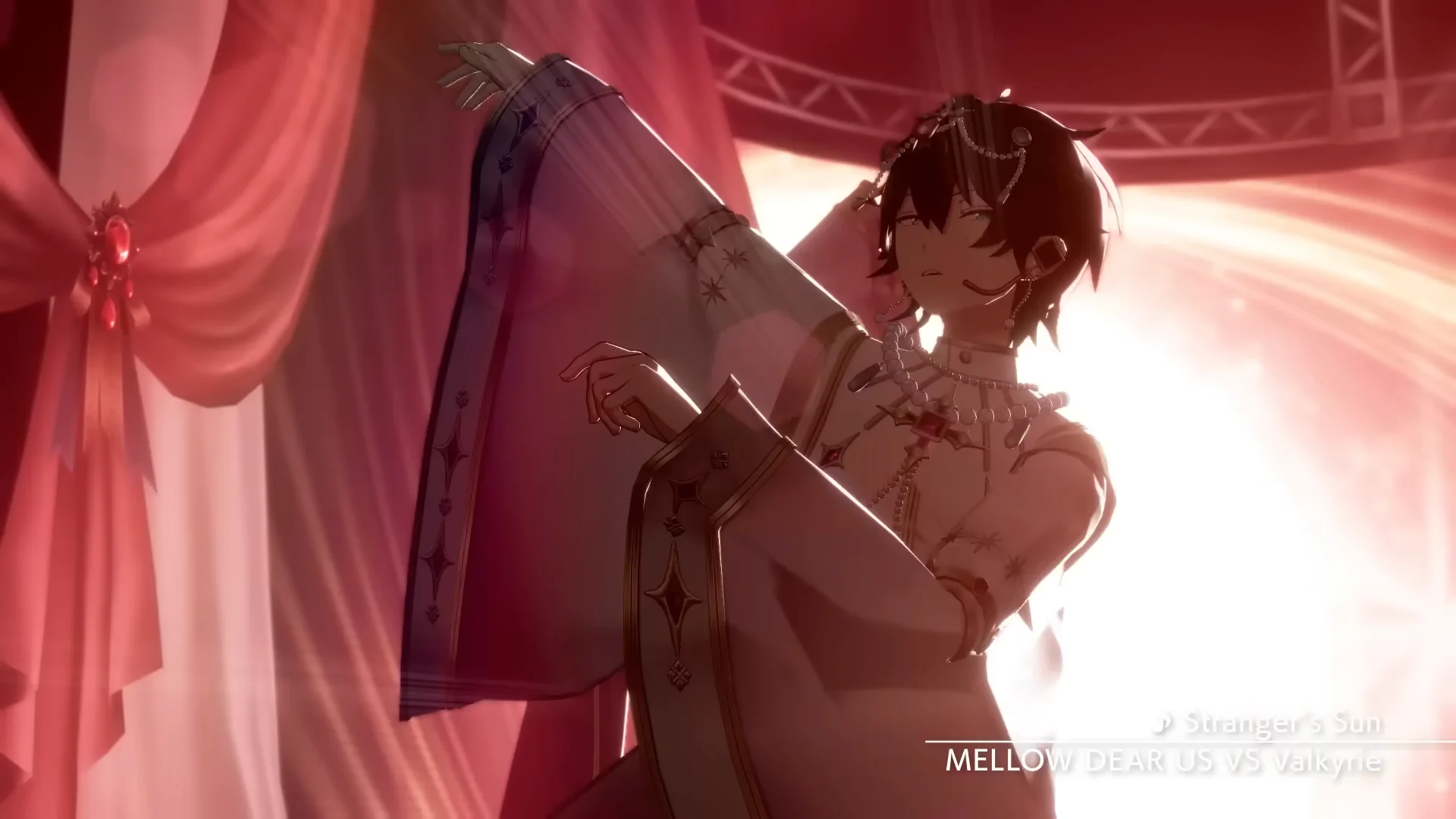
Amaterasu Omikami — the sun goddess of Japanese mythology. In "Stranger's Sun," a song crowned with the sun, Mika is indeed wearing a costume like that of a sun god.
However, at this point, there was one thing that had been nagging at me.
Is Mika really the sun god?
What they sing of in this song is being shone upon by the sun, and becoming its diffusely reflecting light. It is about carrying light a thousand years into the future.
That is not a song of the sun itself, but a song of those who receive the sun's light, surely. To wear a costume modeled on the sun god and sing "behold the sun" is somehow twisted.
That is not a song of the sun itself, but a song of those who receive the sun's light, surely. To wear a costume modeled on the sun god and sing "behold the sun" is somehow twisted.
To give the conclusion first: this nagging feeling was the entrance to the answer.
Mika is not Amaterasu Omikami. He is the "mirror" that reflects Amaterasu Omikami.
And there is one more. Standing in the position facing him in this song is a boy who houses the sun in both of his eyes.
At the end of the main analysis, I wrote about the clash between Shu and Juis — the two leaders of the two units. What this article pursues is the other pair.
Mika Kagehira and Mashu Kuon. The mirror, and the sun.
[Summary] The Three Conclusions This Article Reaches
In Japanese mythology, there is a ritual for calling back the sun that has hidden itself. It requires four things: dance, cheers, a mirror, and magatama. ——And those four things are all present on that stage.
-
① Mika Kagehira is not the sun.
He is the "mirror" that reflects the sun and gives birth to the sun. His odd eyes, with left and right reversed, are not a defect — they are the proof that he is a mirror. -
② Shu Itsuki stepped down from being a god.
Itsuki — another reading of the characters is "itsuki no miya" (the shrine of ritual purity).
The very name is the command to enshrine the mirror. The three acts of a man who called himself a god, until he became one who lives true to his name. -
③ The only thing Mashu Kuon lacks is the "mirror."
His name is made of the tools of the ritual that calls the sun back — dance (mai) and jewels (tama). The mirror alone is missing from it. The only thing that can draw out the wounded, hidden sun is that mirror.
This is a long article, so please feel free to skim and pick out only the parts that interest you.
ATTENTION ※As with the main article, this article touches on the characters' pasts (the collapse of the old Valkyrie, personal interpretations such as the prosthetic-eye theory). Also, every reading of the myths and every mapping onto the characters is entirely this blog's hallucination. Whether any of it is intended as official setting is completely unknown. With that said, I hope you enjoy the beauty of the correspondences.
The Ritual That Calls Back the Sun — Ama-no-Iwato
First, let me speak of the most famous episode in Japanese mythology. This article advances, all the way to its end, toward this single scene.
Because her younger brother, Susanoo-no-Mikoto, rampaged far too violently, the sun goddess Amaterasu Omikami grew angry and hurt, and shut herself away in a rock cave called Ama-no-Iwato (the Heavenly Rock Cave).
With the sun hidden, the world went pitch black. Crops would not grow, calamities filled the land, and the gods were at their wits' end.
Now, how did the gods get the sun to come out?
They did not pry the rock door open by force. What they prepared was a festival.
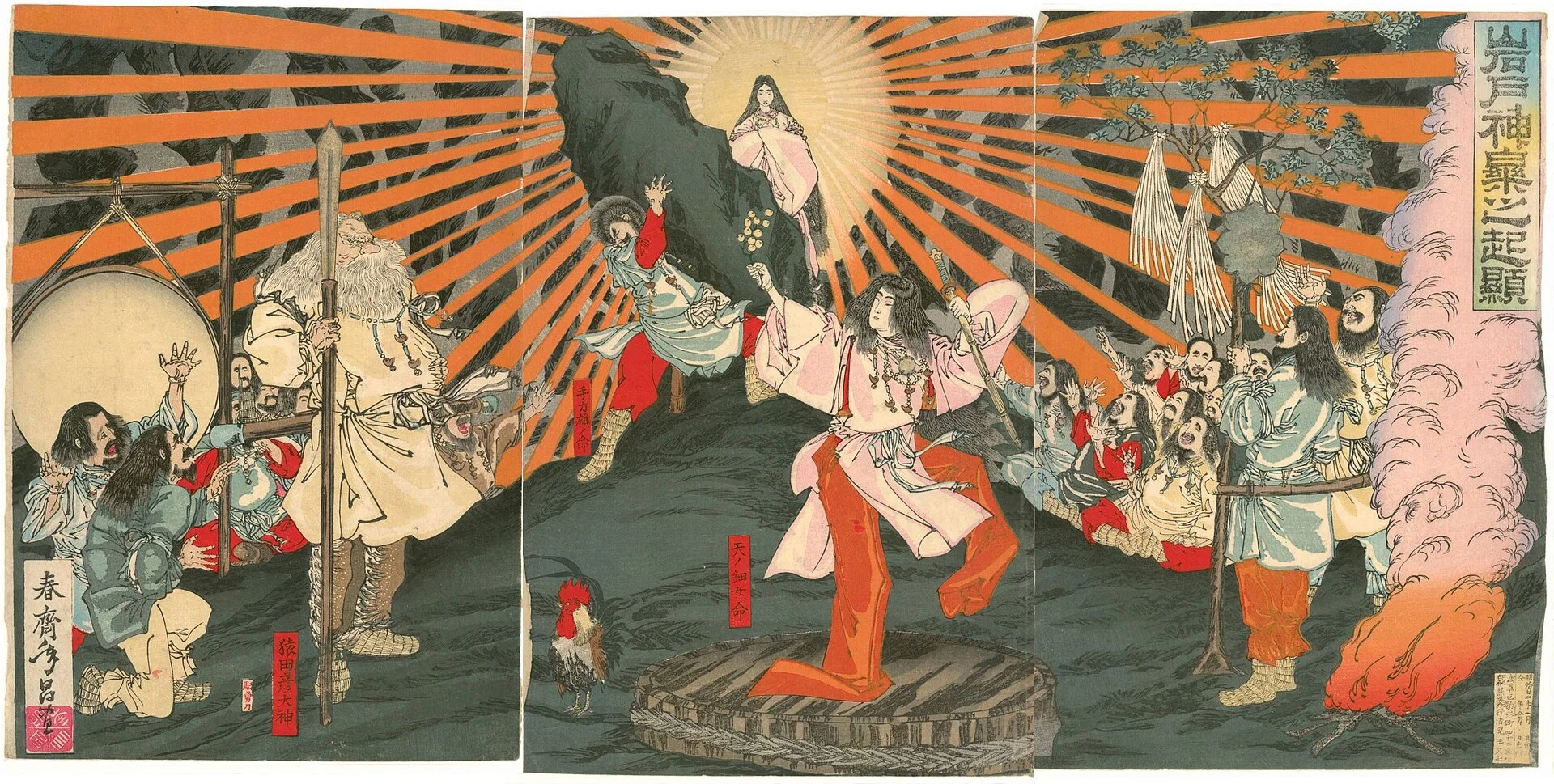
One: dance.
A goddess named Ame-no-Uzume-no-Mikoto dances before the rock cave. It was no elegant kagura. She climbed atop an overturned bucket and stamped it out — a noisy, comical dance.
Two: cheers.
Cheering that dance on, the gods roar with laughter. In the words of the original text, "a roar of laughter" (哄笑). Not sacred silence, but explosions of laughter and applause.
Three: a mirror and magatama.
Upon a sakaki tree were hung the Yata no Kagami (the Eight-Span Mirror) and the Yasakani no Magatama (the Eight-Foot Curved Jewels).
Hearing how much fun it sounded outside, Amaterasu grew curious and opened the rock door a crack. There, the gods told her, "A god more noble than you has arrived," and held out the mirror.
The moment she leaned out to peer into it, her arm was seized, and the sun was pulled out of the rock cave.
The moment she leaned out to peer into it, her arm was seized, and the sun was pulled out of the rock cave.
Dance. Cheers. A mirror. Magatama.
These four things were what it took to bring back the hidden sun.
……And we are looking at these four things on that stage.
Why did it have to be a mirror? I will leave the answer to that at the end of this article.
The "Mirror" of Japanese Myth Is No Ordinary Mirror
Why does the sun, shown a mirror, end up coming out? The mirror of Japanese mythology is not a mere board that returns light.
If you already know this, feel free to pick up just the three-line summary at the end of this section and move on!
If you already know this, feel free to pick up just the three-line summary at the end of this section and move on!
The Mirror Is Amaterasu Omikami Herself
Later in the myths, there is a scene called the Tenson Korin (Descent of the Heavenly Grandchild), in which Amaterasu Omikami sends her grandchild down to the earth — the scene that tells the origin of the Imperial Family.
At this time, she bestowed upon him that same Yata no Kagami that had been hung before the rock cave, and declared:
Think of looking upon this mirror as the same as looking upon me. Enshrine it in the same hall, and worship it as a mirror of ritual purity (iwai).
The Kojiki carries words to the same effect.
Take this mirror wholly as my very spirit (mitama), and serve it in purity (itsuki tatematsure), just as you would revere me.
The mirror is not Amaterasu Omikami's "likeness." It is Amaterasu Omikami's "true body."
This is no metaphor; it lives on to this day as Shinto doctrine. The sacred object (shintai) enshrined at the Inner Shrine of Ise Jingu is this very mirror.
The mirrors set in the main halls of shrines all across Japan trace back to this episode as well.
The mirrors set in the main halls of shrines all across Japan trace back to this episode as well.
And here, the question from the opening resolves itself.
"Mika's costume looks like Amaterasu Omikami" — this intuition is correct.
But not because he is the sun god. Because he is the mirror.
A mirror that has reflected the sun is indistinguishable from the sun. That is why he looks like Amaterasu.
(Incidentally, the words "itsuki tatematsure" in the divine edict — "itsuku" means to purify oneself and serve a god. This verb will appear once more later.)
The Sun Was Born from an Eye
One more thing. The story of where the sun was born from in the first place.
There was a divine couple, Izanagi and Izanami. Izanami lost her life to the burns she suffered giving birth to the god of fire, and descended to Yomi no Kuni, the land of the dead.
Izanagi went to bring his wife back, but seeing what she had become, he fled back to the surface, barely escaping with his life.
Izanagi went to bring his wife back, but seeing what she had become, he fled back to the surface, barely escaping with his life.
Having returned from the land of the dead, he cleansed his body in a river to wash away the defilement. This is called misogi. And at the end of this misogi, three noble gods were born.
-
When he washed his left eye — the sun goddess, Amaterasu Omikami
-
When he washed his right eye — the moon god, Tsukuyomi-no-Mikoto
-
When he washed his nose — the storm god, Susanoo-no-Mikoto
The sun of Japanese mythology is born on the far side of having passed through death.
Returning from the land of the dead and washing away the defilement — only at the end of that is light born.
Returning from the land of the dead and washing away the defilement — only at the end of that is light born.
As the story of a pair who were once "killed" and rose again from the bottom of the grave, this is all too suggestive, isn't it?
Their light could only be born after passing through death — the groundwork for reading it that way is already laid in the very earliest stratum of the myths.
Their light could only be born after passing through death — the groundwork for reading it that way is already laid in the very earliest stratum of the myths.
The Sun Was Also Born from a Mirror
And there is more.
The Nihon Shoki records, regarding the birth of these three gods, a completely different variant tradition (Book Five, first variant).
Here, Izanagi gives birth to the gods alone — but his method is bizarre.
Here, Izanagi gives birth to the gods alone — but his method is bizarre.
-
He held a white copper mirror (masokagami) in his left hand. Then, from it, the sun goddess appeared.
-
He held a white copper mirror in his right hand. Then, from it, the moon god appeared.
Not from eyes — from mirrors. In this variant tradition, it was mirrors that gave birth to the sun and the moon.
The key points of this section
-
The mirror is not Amaterasu's likeness, but Amaterasu herself
-
The sun of Japanese mythology was born on the far side of having passed through death
-
The vessels that house the sun and moon are eyes — and mirrors
The Mirror-Reversed Eyes — Why Are Mika Kagehira's Left and Right Swapped?
Mystery #1: Why are Mika's odd eyes "completely reversed" from the placement of the sun and moon in Japanese myth?
Now, let us come to the main subject.
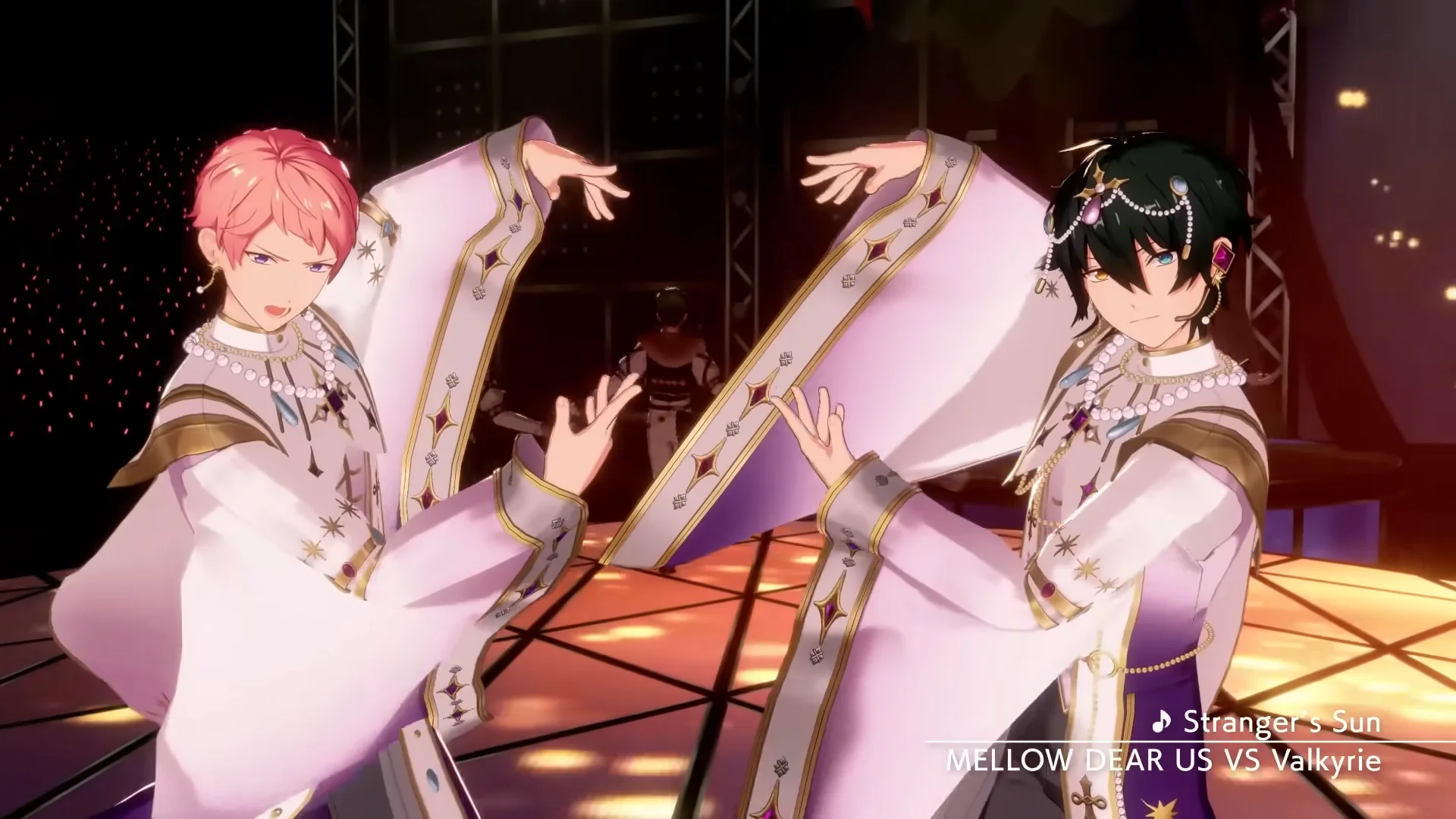
Mika Kagehira's eyes are odd eyes: his right eye is yellow, his left eye is blue.
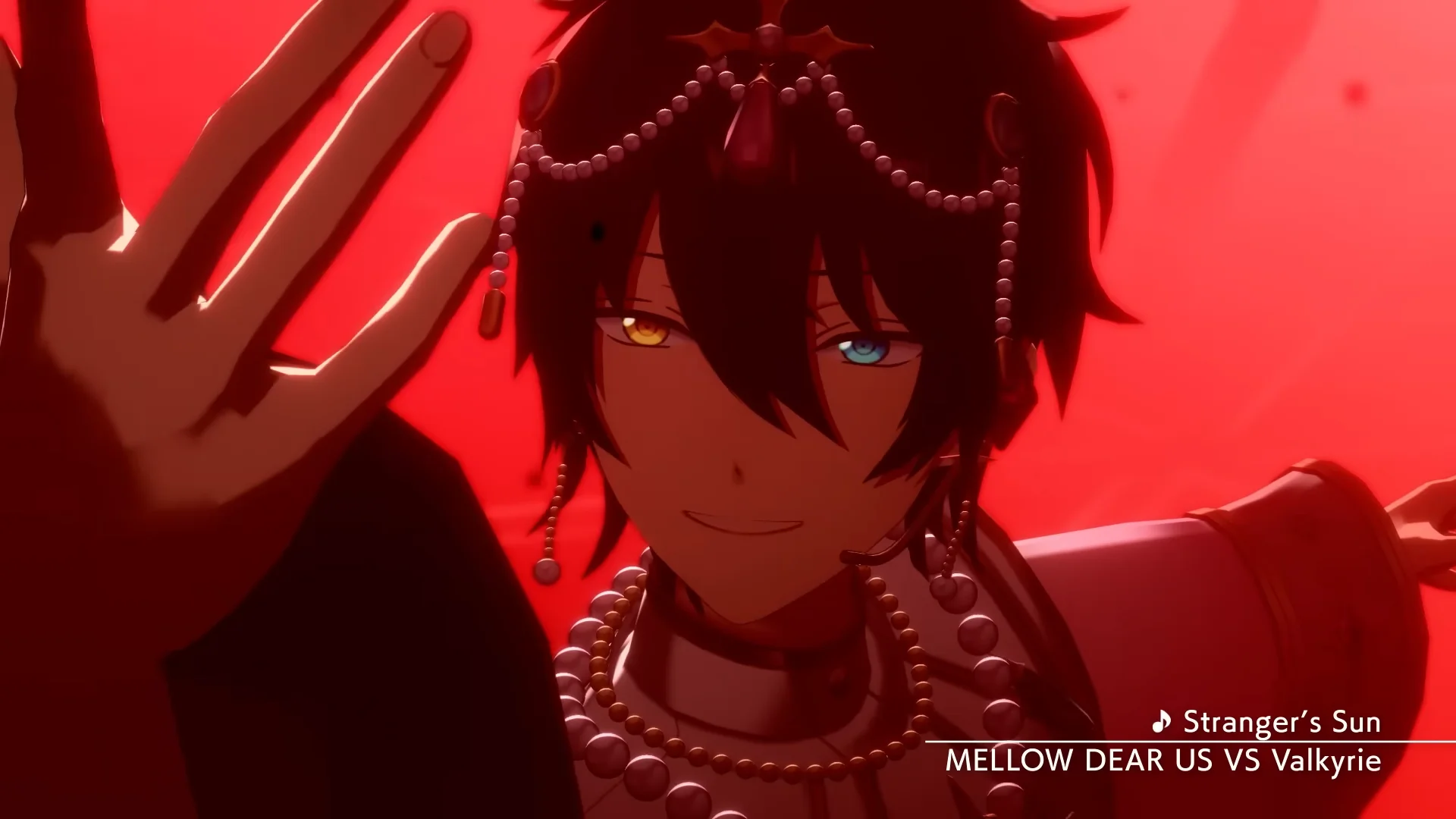
Recall the placement in the myths. The sun from the left, the moon from the right.
In the misogi version, the sun was born from the left eye and the moon from the right.
In the mirror version, the sun was born from the mirror in the left hand and the moon from the mirror in the right.
In the misogi version, the sun was born from the left eye and the moon from the right.
In the mirror version, the sun was born from the mirror in the left hand and the moon from the mirror in the right.
But the placement of Mika's eyes is ————
-
Left eye — blue, the color of night and water. Here, it stands for the moon.
-
Right eye — yellow, the color of the sun.
Left and right are completely swapped.
And a mirror reverses left and right.
Mika's eyes are not getting the myth's placement wrong.
They are reflecting it.
Not the god himself who housed the sun and moon (Izanagi), but the mirror's side, which reflected that face.
They are reflecting it.
Not the god himself who housed the sun and moon (Izanagi), but the mirror's side, which reflected that face.
That left and right are reversed was not a contradiction, but physical proof that he is a mirror.
And recall once more the variant tradition from earlier. The sun and moon were born from mirrors. In Japanese mythology, the mirror is the vessel that gives birth to the sun.
Eyes into which the celestial bodies have been set upside down. Those mismatched eyes that he once grieved over, thought warped, and wanted to hide.
They were not a defect — they were a sacred surface, made to reflect the sun and to give birth to the sun, were they not?
And one more thing. It has long been pointed out —
read "Mika" backwards, and you get "kami."
read "Mika" backwards, and you get "kami."
He himself is not a god. But reverse him, and he becomes one.
That is what a mirror is.
What Mika Wears — Ritual Garb with Its God's Name Erased
Mystery #2: Why does this ritual garb bear a cross and a magatama upon the same chest?
Ritual Garb That Belongs to No Shrine
If he is a mirror, then something of it should show in his appearance as well.
Let us return here to the costume that started all of this.
To be honest, first of all, this costume's first language is Western ritual garb. The large cross at the chest, the decorative band running vertically down the center of the body (reminiscent of the stole of a priest's chasuble), the strands of pearls hanging in layer upon layer (like a rosary, too).
To call it "the costume of Amaterasu Omikami," the vocabulary of the church is far too strong.
To call it "the costume of Amaterasu Omikami," the vocabulary of the church is far too strong.
However, look closely, and it is not only that.
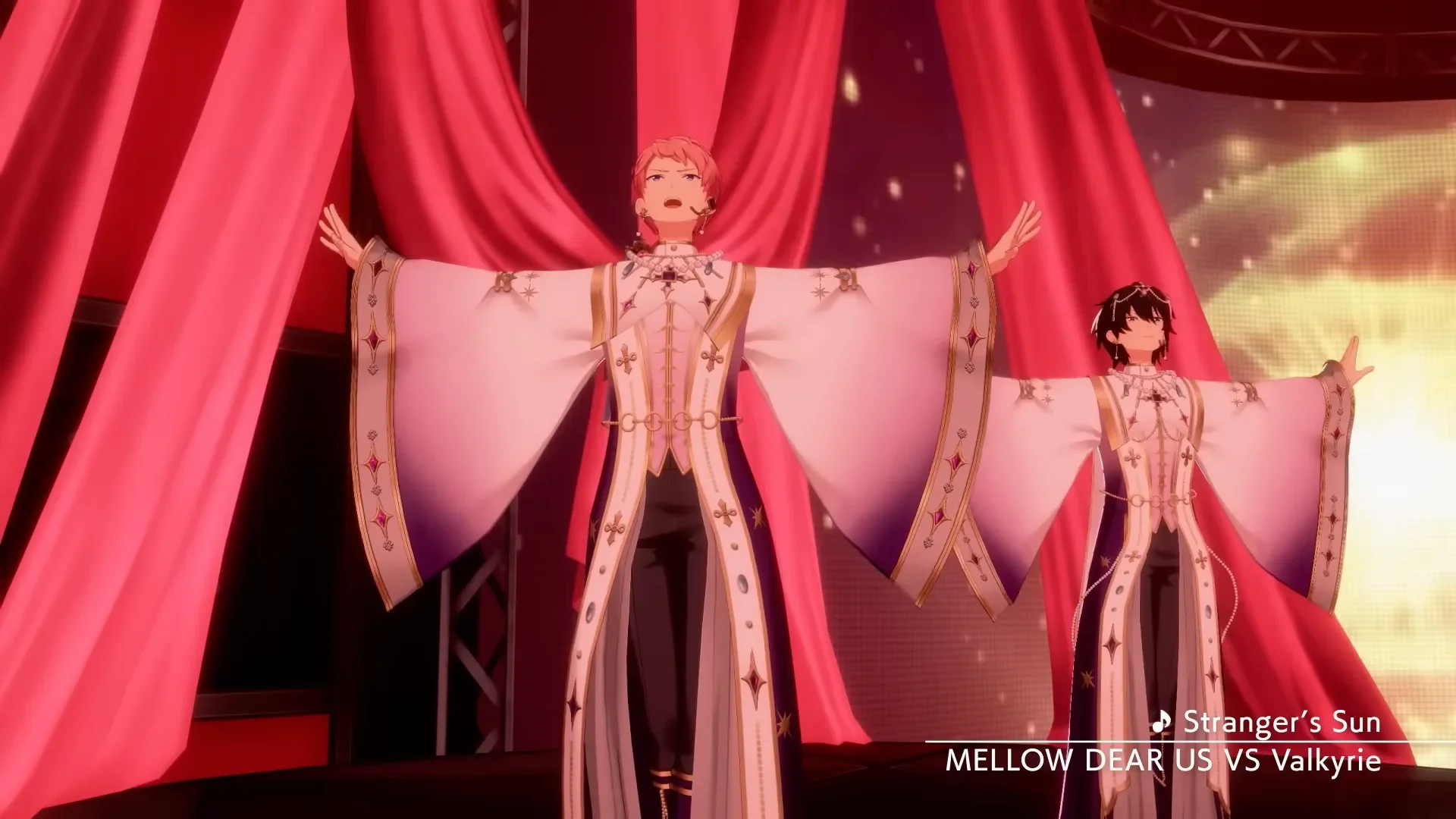
- Those straight, wide sleeves spreading from the shoulders.
The sleeves of Western ritual garb are normally either more fitted or fall vertically; that horizontal spread bears the character of the flat cutting of Japanese dress, such as kariginu and junihitoe.
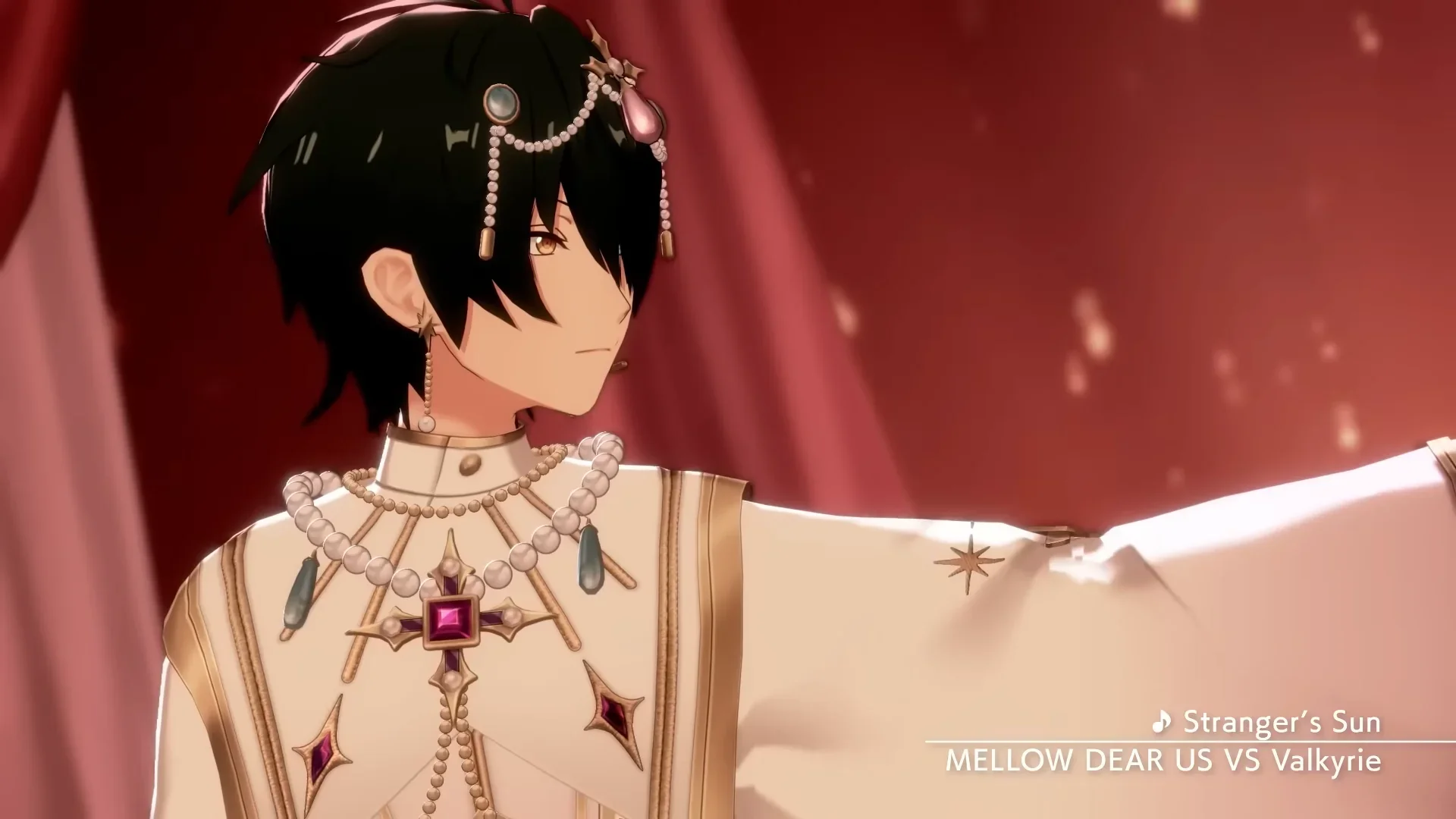
- Mixed in among the strands of pearls, hanging down, grayish-green teardrop ornaments.
By classification of shape, they can be read as magatama — a design descending from that Yasakani no Magatama hung upon the sakaki tree.
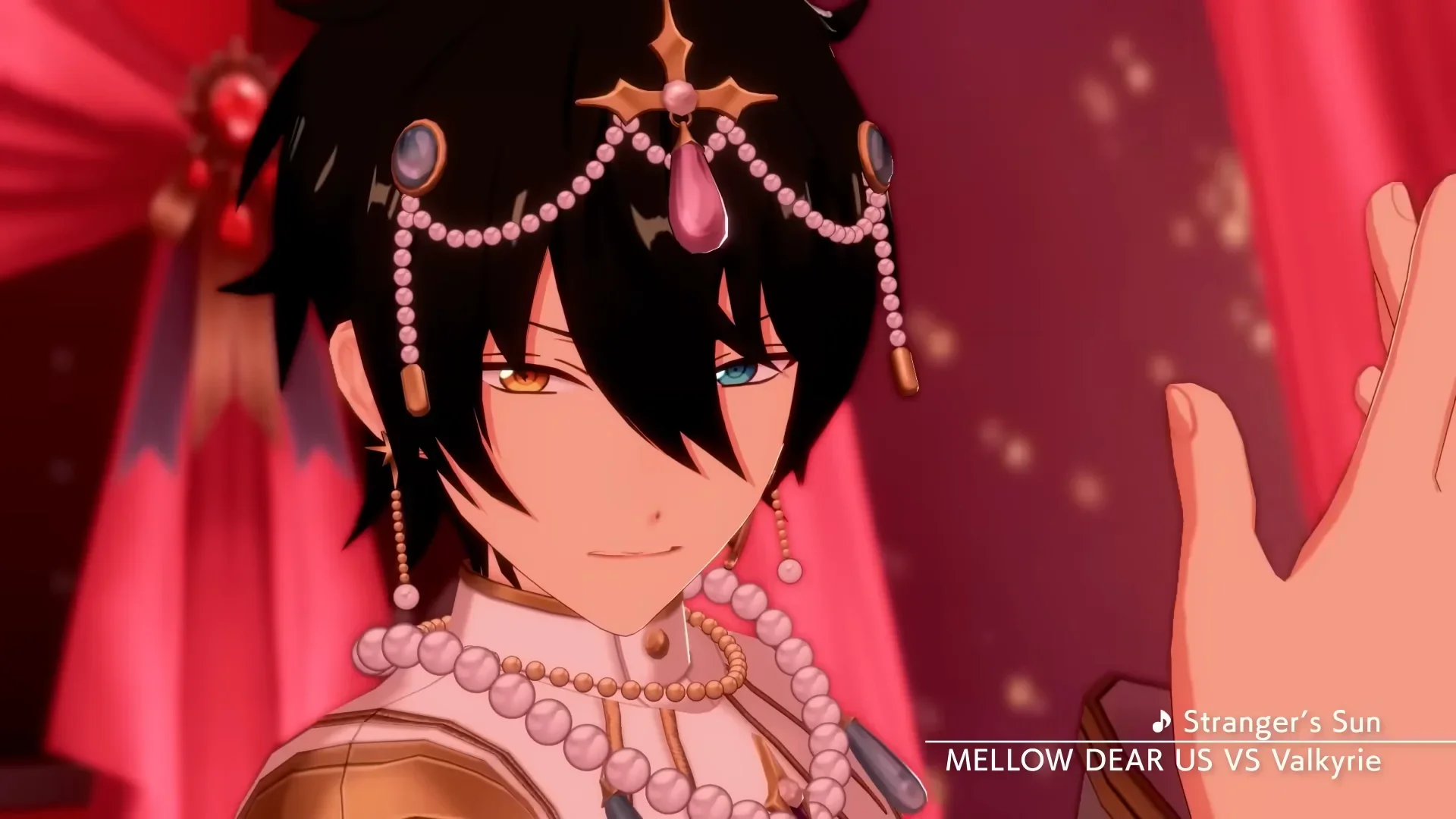
- An ornament with pendants crossing the forehead.
That structure, with chains and drops hanging from a crown, resembles the pendants of Buddhist statues and Eastern crowns.
A cross and a magatama, coexisting upon the same chest.
This is neither a purely "Japanese-style costume" nor a "church costume." It is ritual garb from which the name of the god it serves has been deliberately erased.
It belongs to no shrine, and yet it is unmistakably the attire of one who serves "something."
It belongs to no shrine, and yet it is unmistakably the attire of one who serves "something."
(As for reading the costume itself, I also touch on it in a separate article, "Valkyrie × MDU: The Meaning Hidden in the Costumes," so please have a look at that as well.)
And one more thing. The costume is embroidered with countless stars.
Golden eight-pointed stars, crimson four-pointed stars.
Golden eight-pointed stars, crimson four-pointed stars.
In the words Shu sings in the first part, there is ikuseiso (幾星霜) — years so long they are counted by the cycles of the stars.
The countless stars scattered across the costume overlap exactly with this vocabulary.
The countless stars scattered across the costume overlap exactly with this vocabulary.
The stars are countless.
But the sun is one.
But the sun is one.
——The costume is already wearing the refrain.
What the Jacket Drew, and What It Did Not
Let us now turn our eyes to this song's digital jacket image.
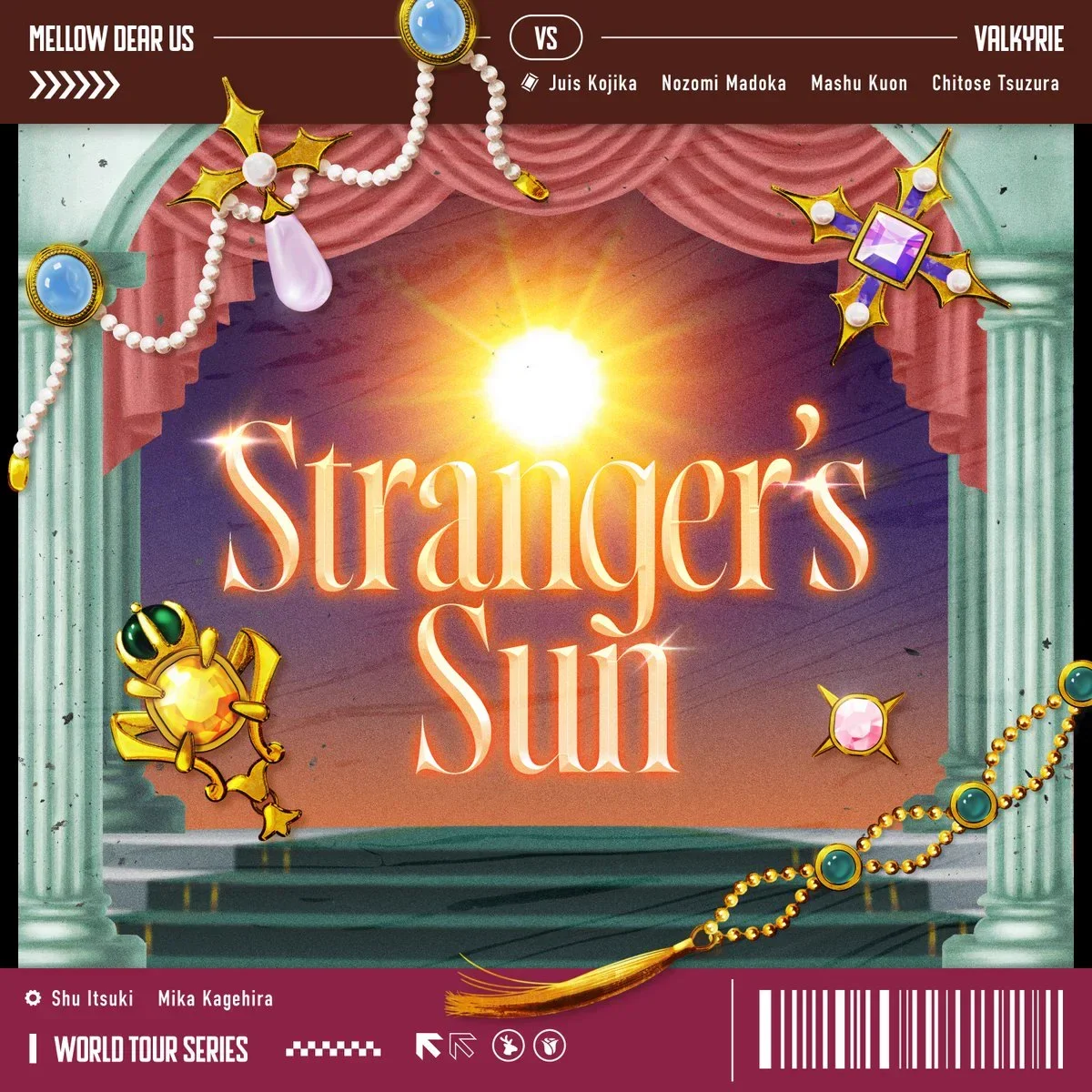
In the upper part — that is, arranged on the Valkyrie side — are jewels.
These are not a mere row of decorations; they are the very ornaments the members wore in the MV.
These are not a mere row of decorations; they are the very ornaments the members wore in the MV.
First, the blue jewel.
This is the pendant ornament that decorates Mika's forehead, of the teardrop shape hanging from the strand of pearls — the design that can be read as a magatama.
This is the pendant ornament that decorates Mika's forehead, of the teardrop shape hanging from the strand of pearls — the design that can be read as a magatama.
One of the tools of the ritual hangs upon his forehead.
Then, what of the mirror?
Neither on the jacket nor on the costume can any design modeled on a mirror be found.
But that may be only natural.
One cannot hang a sacred object (shintai) from one's chest as an ornament.
But that may be only natural.
One cannot hang a sacred object (shintai) from one's chest as an ornament.
And in "Stranger's Sun," the one placed at Valkyrie's center is not Shu, but Mika.
The mirror was not an ornament — it was set at the center.
Just as, in the innermost depths of a shrine's main hall, a mirror is enshrined.
The Other Sun — The Boy Who Houses the Sun in Both Eyes
Next, let us turn our attention to the person standing on the opposite side of Mika — he who has the sacred surface that reflects the sun and gives birth to the sun.
Mashu Kuon's eyes are both yellow. In both eyes, the color of the sun.
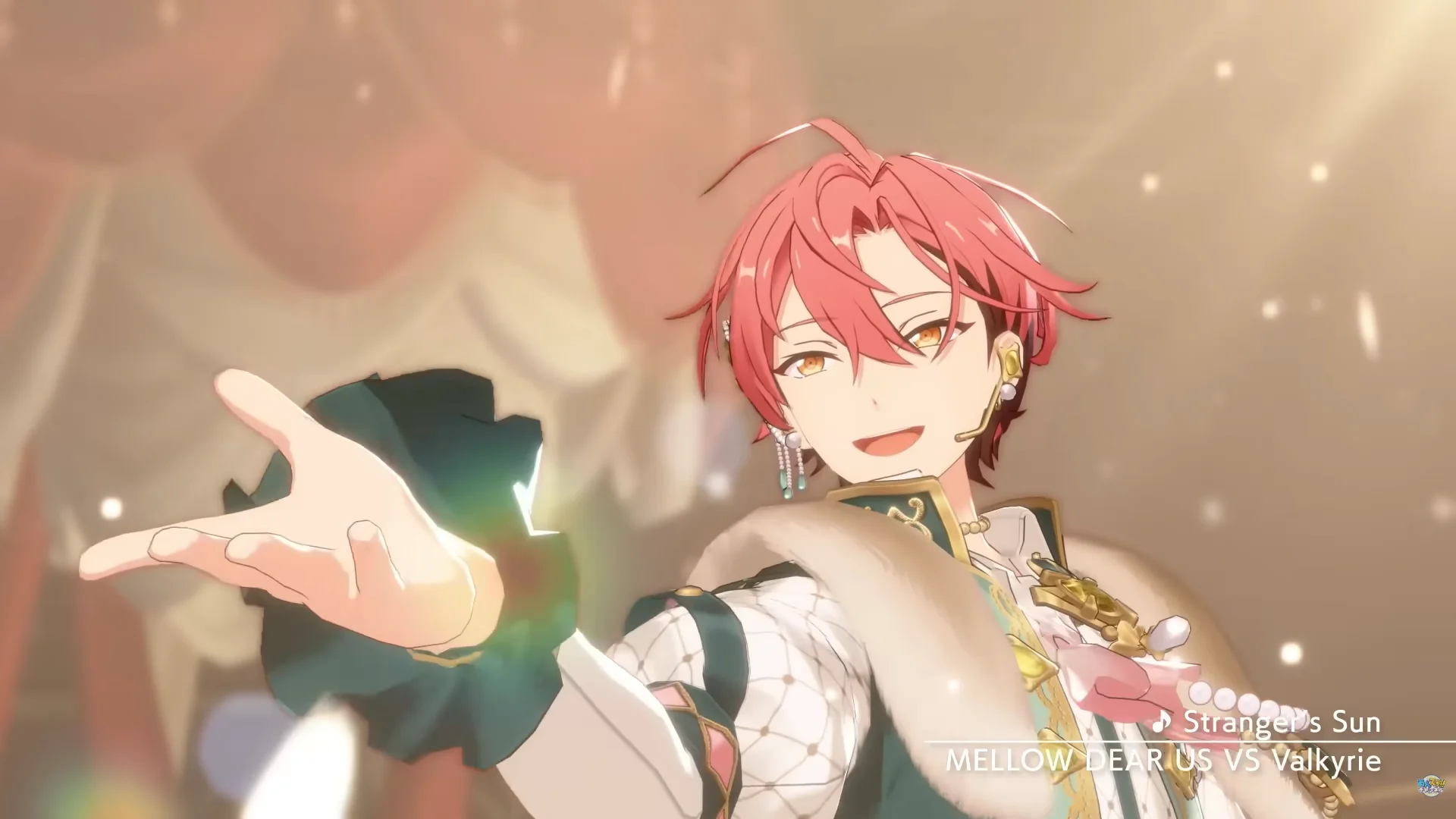
No reversal, no moon — just two suns.
He is a boy who stands not as a mirror, but as the sun itself.
That figure I wrote of in the main analysis — "looking straight up into the light" — turns out to have been a picture of the sun gazing up at the sun.
He is a boy who stands not as a mirror, but as the sun itself.
That figure I wrote of in the main analysis — "looking straight up into the light" — turns out to have been a picture of the sun gazing up at the sun.
However — as those who have read this blog's spin-off analysis may remember — I once examined the possibility that one of his eyes is a prosthetic eye, the result of an accident in his childhood.
If that is so.
Of the two suns shining in his eyes, one is a fake.
And the audience can never tell which is the real one and which is glass.
And the audience can never tell which is the real one and which is glass.
……This is, down to the last detail, the same structure as his way of being that I wrote about in the main analysis — a "perfect false image," in which perfectly performed radiance and genuine radiance cannot be told apart.
He was already holding that up upon his face.
He was already holding that up upon his face.
The Meaning Hidden in the Name "Mashu Kuon"
Kuon (久遠). A Buddhist term pointing to a distant past or a distant future in time — in other words, eternity.
Recall the axis I set up in the main analysis.
Eternal Valkyrie, momentary MDU.
Eternal Valkyrie, momentary MDU.
On that momentary side stands a man named "Eternity."
What is more.
The one singing these words in this song was none other than he himself.
The one singing these words in this song was none other than he himself.
Eternity, you know, doesn't give the present any value at all
A man bearing the name "Kuon" (Eternity) is singing that eternity has no value.
He belts out words that deny his own name with a belligerent glint in his eyes and a fulfilled expression.
……Perhaps this is what a "perfect false image" is.
……Perhaps this is what a "perfect false image" is.
As for his name, I will touch on it just once more at the end of this article.
The One Who Enshrines the Mirror — The Prophecy of the Name "Itsuki"
The mirror (Mika), and the sun (Mashu). The actors are assembled.
But in Japan's solar myths, there is one more role.
The one who enshrines the mirror.
The one who enshrines the mirror.
And in fact, the comment I introduced at the beginning had a continuation.
"The people who served Amaterasu Omikami were called Saiō, and they lived in a residence called the Saigū."
Amaterasu Omikami is enshrined at Ise Jingu in Mie Prefecture as the ancestral deity of the Imperial Family.
And from ancient times through the medieval period, for roughly 660 years, special women chosen to serve this Amaterasu Omikami in the Emperor's stead were selected, generation after generation.
And from ancient times through the medieval period, for roughly 660 years, special women chosen to serve this Amaterasu Omikami in the Emperor's stead were selected, generation after generation.
They were the Saiō (斎王).
Those chosen as Saiō were unmarried imperial princesses (imperial daughters and princesses of the blood). Each time the Emperor changed, one was chosen by divination (bokujo).
In other words, the woman's own will was never asked. The chosen princess left the capital, parted from her family, was forbidden romance, and spent her days in Ise offering prayers to the god and nothing else.
In other words, the woman's own will was never asked. The chosen princess left the capital, parted from her family, was forbidden romance, and spent her days in Ise offering prayers to the god and nothing else.
There is a word expressing the Saiō's formal role: mitsueshiro (御杖代).
It means "one who becomes the substitute for the god's staff" — in other words, a vessel who serves the god in the Emperor's place.
It means "one who becomes the substitute for the god's staff" — in other words, a vessel who serves the god in the Emperor's place.
And the name of the palace and residence where that Saiō lived — a word that in later ages came to refer to the women themselves — was the Saigū (斎宮).
The Saigū is located near Ise Jingu, but it is not inside the shrine. It was placed some 15 kilometers away from the shrine, and it is said that the Saiō actually went before the god only three times a year.
Spending her whole life devoted to the sun god, while living in a place separated from the sun god.
Being the person closest to the god, while unable to live within the shrine.
Being the person closest to the god, while unable to live within the shrine.
This is the history that the word "Saigū" carries.
……Saigū.
Yes — the Saigū of Shu Itsuki (斎宮宗).
And then, that verb I touched on in the mirror section.
The divine edict of the Kojiki — "itsuki tatematsure" (serve in purity).
Another reading of 斎宮 is — itsuki no miya.
The verb of the command "enshrine the mirror" has become, just as it is, his surname.
Of course, there is nothing unusual in itself about a character's surname being the same as a real word. If that were all, this would end as a "huh, is that so" story.
But recall what he sings in "Stranger's Sun" — a song crowned with the Stranger's Sun.
Behold it — the sun that burns unceasingly
Do not avert your eyes from the sun, he commands. And Valkyrie sings that they will be shone upon by the sun and become its diffusely reflecting light.
A man bearing the name of one who serves the sun god is singing "gaze upon the sun," and shining as he bathes in its light.
……This is the moment when, after ten years, his name caught up with its meaning.
The Three-Act Story of the Man Who Named Himself a God
"Now hold on just a minute!" — some of you may be thinking that.
When it comes to Shu Itsuki, surely it's that self-introduction, you might say.
"I am the emperor of Yumenosaki Academy, Shu Itsuki! The god of this world, who creates all things and manipulates everything with threads!"
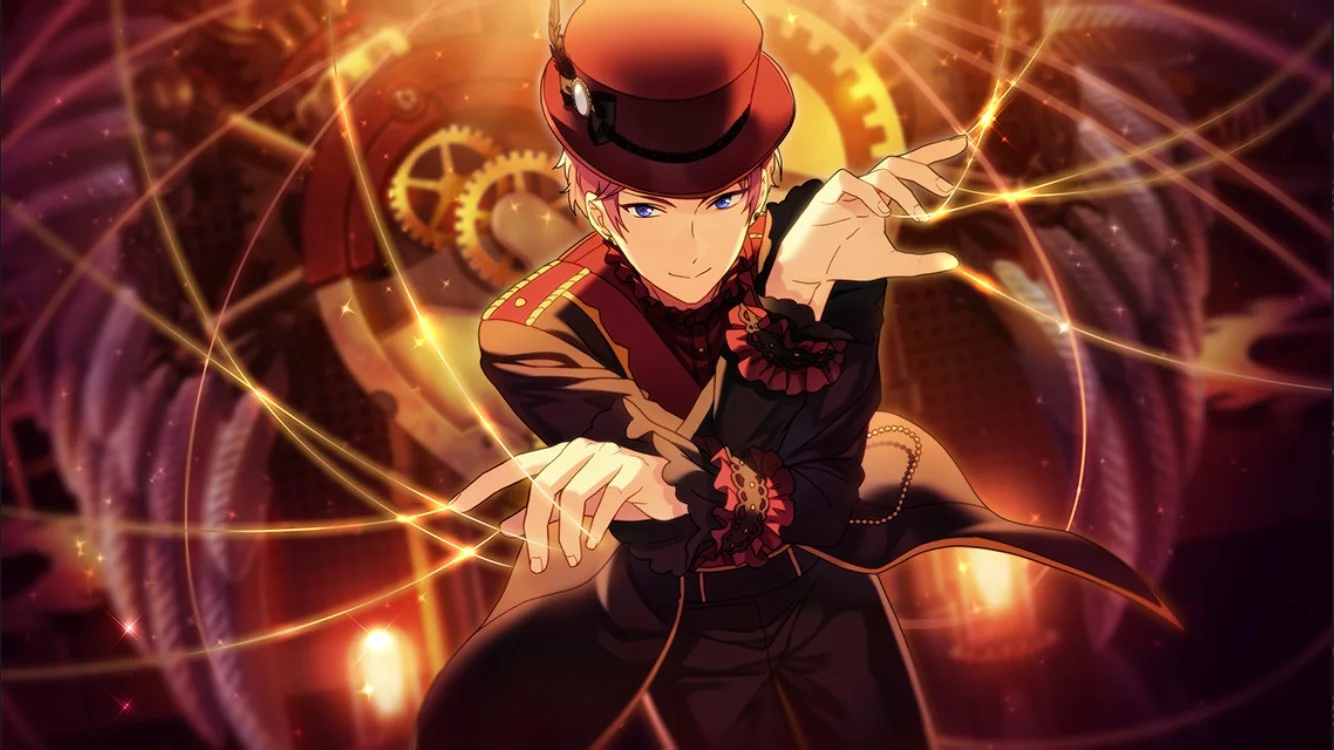
That's right. He was a man who, while bearing the name of one who serves a god, named himself a god.
Is this a contradiction? I don't think so.
When you check when that line was spoken, you find that, on the contrary, the entirety of his story is folded up inside it.
When you check when that line was spoken, you find that, on the contrary, the entirety of his story is folded up inside it.
First, there was an era when he truly stood at the summit.
The old Valkyrie — Shu, Mika Kagehira, and Nazuna Nito, who is now with Ra*bits.
That unit of three reigned at the summit of a corrupt Yumenosaki Academy with performances without the slightest deviation.
That unit of three reigned at the summit of a corrupt Yumenosaki Academy with performances without the slightest deviation.
And then, the kingdom was burned down.
Before Eichi Tenshouin's revolution, his stage was destroyed.
Together with the frenzy of the whole academy, which desired the corrupt summit to be dragged down.
Shu's mind exceeded its limits, until he could no longer carry out proper unit activities. Before long, Nazuna left as well.
Together with the frenzy of the whole academy, which desired the corrupt summit to be dragged down.
Shu's mind exceeded its limits, until he could no longer carry out proper unit activities. Before long, Nazuna left as well.
The throne was lost, his companions gone, and all that remained was a defeat he could not acknowledge.
He burrowed into an underground live house and came to live keeping the light at a distance.
He burrowed into an underground live house and came to live keeping the light at a distance.
That self-introduction is a line from after all that.
A man who had lost his throne and shut himself underground was still calling himself "the god of this world." And what's more, that line has a continuation like this.
"It seems you lot are fools who have forgotten that! Now — let the puppet show that had stopped begin again, splendidly!"
The puppet show that had stopped.
He knows that his own play stopped once. Knowing that, he still calls himself "god."
In other words, that was no declaration of omnipotence — it was the cry of denial of one who had already been killed.
And then, he was dragged out onto the surface once more.
The Tanabata Festival. The night when Valkyrie, long burrowed underground, was drawn out onto a great stage after so long. The result was defeat.
But later, before the costumes of that time at the Valkyrie costume exhibition held at Hatoyama Hall, he looked back on it like this.
"That incident was a forced awakening. Like being made to choose, as a chrysalis rudely shaken awake: become a butterfly and take wing, or fall to the ground and rot away just as you are.""When I came out onto the surface, the stars were twinkling overhead. The sky stretched on endlessly. …The world was more complex than I had thought — and more beautiful."
It was the moment when the man who had named himself a god first looked up at something greater than himself.
Act One: Usurpation (an arrogant self-styling).
While bearing the name of the sun god's attendant, he defied that name and set himself upon the god's seat.
While bearing the name of the sun god's attendant, he defied that name and set himself upon the god's seat.
Act Two: The Fall.
Scorched by the sun of the masses' frenzy, he fell.
He lost his throne and went underground. And still he kept calling himself a god — the time of denial.
Scorched by the sun of the masses' frenzy, he fell.
He lost his throne and went underground. And still he kept calling himself a god — the time of denial.
Act Three: Service.
Dragged forcibly out onto the surface, he looked up and there were stars in the sky.
And now, in the present.
He does not sing "I am the sun." He looks up at the sun, sings "behold it," and stands on the side that bathes in the pouring light and reflects it diffusely.
Dragged forcibly out onto the surface, he looked up and there were stars in the sky.
And now, in the present.
He does not sing "I am the sun." He looks up at the sun, sings "behold it," and stands on the side that bathes in the pouring light and reflects it diffusely.
The man who stepped down from being a god did not become powerless.
He became one who lives true to the name "Itsuki" (Saigū).
He became one who lives true to the name "Itsuki" (Saigū).
Two Who Descended from Opposite Directions
With these three acts in mind, the story of the boy standing beside him — Mika — rises up as its counterpart.
Mika Kagehira once called himself "Oshi-san's doll."
Recall the mitsueshiro from earlier. It is the "substitute vessel" for serving a god. And in Shinto, there is the concept of katashiro and yorishiro — paper or wood in human form made to take on defilement and roles in one's stead. A doll (hitogata), in its original sense, is a vessel for becoming someone's substitute.
The "substitute" who serves Amaterasu Omikami — the Saigū.
The "substitute" who serves that Saigū (the self-styled god) — the doll, Mika.
The "substitute" who serves that Saigū (the self-styled god) — the doll, Mika.
In the kingdom of the man who usurped godhood, Mika lived as the substitute of a substitute.
But as you know, over the course of his path as Valkyrie, Mika accepted his human imperfection and became an artist of flesh and blood, a single person. From doll to human.
Shu, meanwhile, went from god to one who serves.
The two descended the stairs from opposite directions, and now they stand on the same stage. And beside his disciple, who has become a sacred object (shintai), the master bears the name of the one who enshrines the mirror.
What Was Being Reenacted on That Stage
Mystery #3: What is the "one single lack" hidden in the name Mashu Kuon?
It has gotten quite long, but at last the mirror (Mika), the sun (Mashu), and the one who enshrines the mirror (Shu) — all the actors are assembled.
Here, let us return to the first section.
What is needed to call back the hidden sun is dance, and cheers, and a mirror and magatama.
This is the very composition of "Stranger's Sun."
MDU — dance and cheers.
They who light the fire of frenzy and sing that cheers are life itself.
And above all, they who sing it through to the end like this — I don't mind being a clown.
They who light the fire of frenzy and sing that cheers are life itself.
And above all, they who sing it through to the end like this — I don't mind being a clown.
Recall. What drew the sun out at Ama-no-Iwato was the laughter of the gods. Uzume danced without decorum in order to take that laughter. The clown was the officiant of the rite that brings the sun back.
Valkyrie — the mirror and the magatama.
A magatama hanging from a forehead, a prism held up at the chest that splits the light into a spectrum, and at their center, a boy who is the mirror itself.
A magatama hanging from a forehead, a prism held up at the chest that splits the light into a spectrum, and at their center, a boy who is the mirror itself.
Moreover, there is the choreography of the chorus. Valkyrie, who made static, doll-like, Gothic forms their aesthetic, is here stepping out hip-hop steps. It is fair to call it a choreography most unlike them.
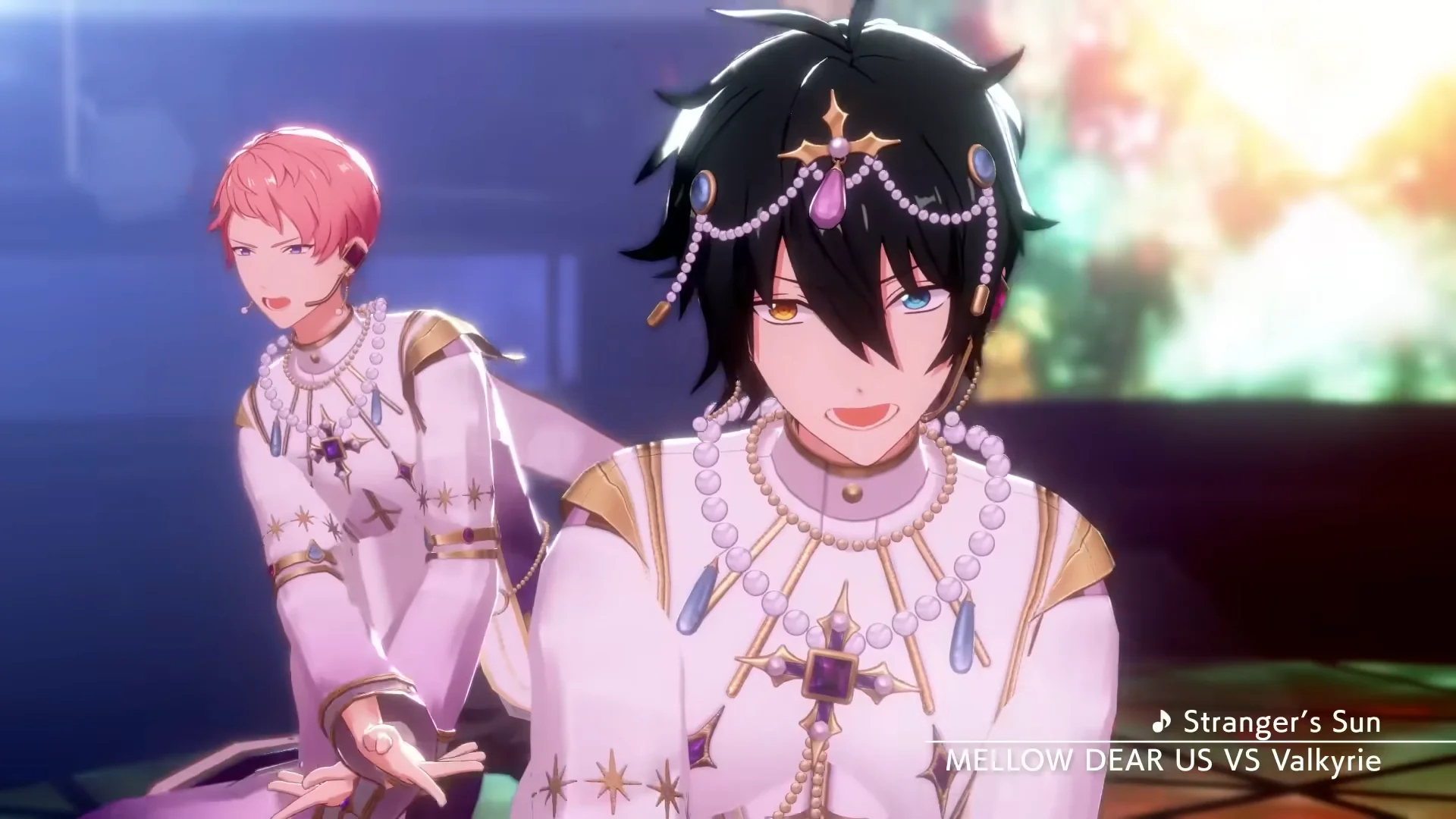
Not refinement, but stamping.
That puppeteer, the very embodiment of aestheticism, is dancing Uzume's unseemly stamping.
And Ame-no-Uzume-no-Mikoto, who danced that dance, is today enshrined as the god of the performing arts. She is the goddess regarded as the origin of all performing arts in Japan.
Doesn't she overlap with the stage of "Stranger's Sun" shown by the idols of Valkyrie and MDU…?
The Sun in the Mirror Is a "Stranger's" Light
In the first section, there was a question whose answer I said I would leave for last. Why did the gods hold out a mirror?
Amaterasu, peering into the mirror held out to her, gazed into the radiance reflected there, and leaned forward to see it better.
What was reflected in the mirror was Amaterasu's own face.
And she did not realize it was herself.
And she did not realize it was herself.
The sun goddess believed the light of herself, reflected in a mirror, to be the light of an unknown other. As a sun too beautiful, too distant, to think of as her own.
——What should we call the sun reflected in a mirror?
Stranger's Sun.
The stranger's sun is not someone else's sun.
It is one's own sun, seen through a mirror.
And in the instant a person is captivated by that stranger's sun, they take one step out of the rock cave they had shut themselves in.
It is one's own sun, seen through a mirror.
And in the instant a person is captivated by that stranger's sun, they take one step out of the rock cave they had shut themselves in.
And in the MV, the sun — which throughout the first half was only an image projected on the screen in the background — appears upon the stage as a physical presence in the final part, and shines down upon them.
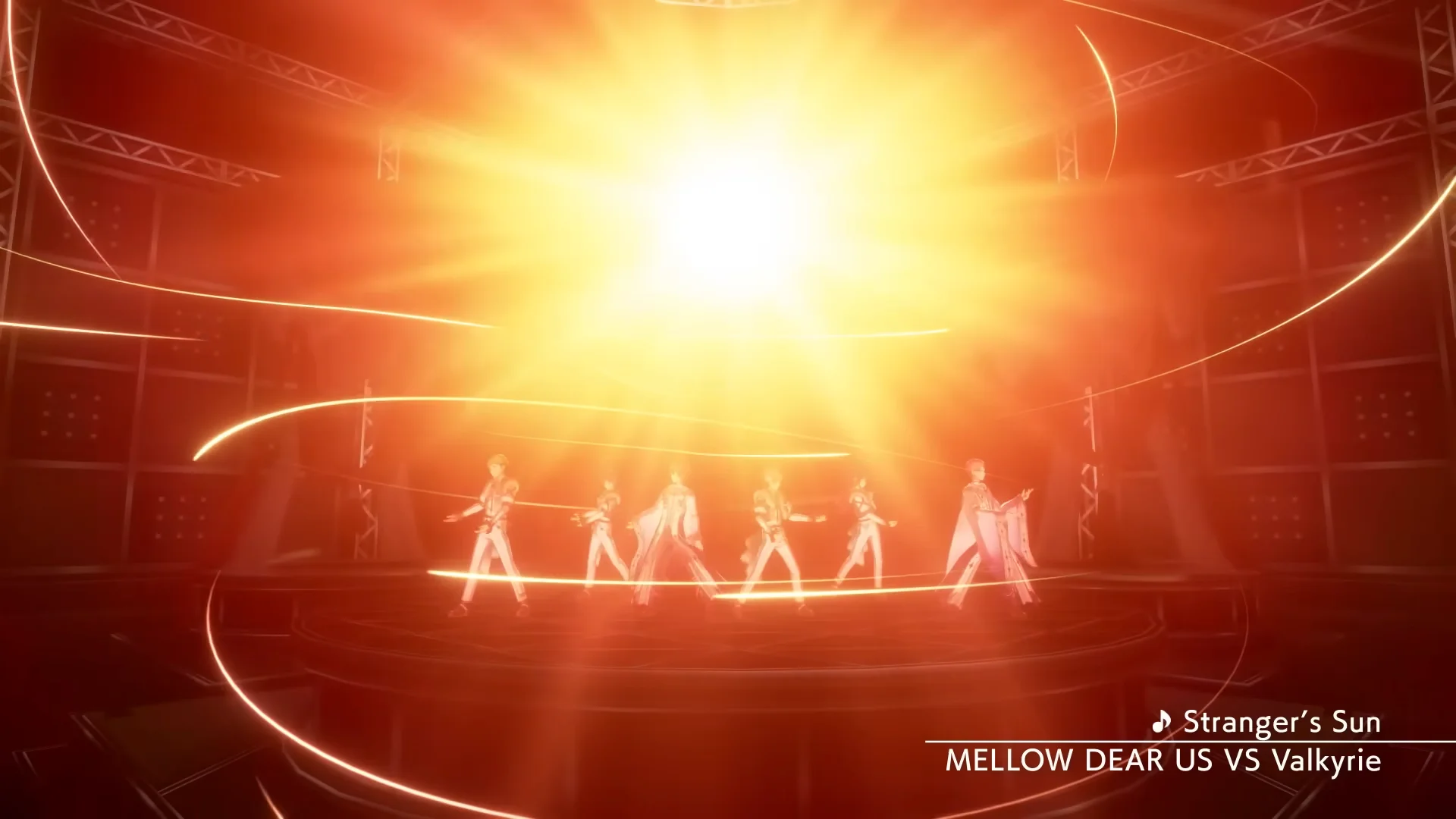
The image comes first, and the real thing appears after.
The same order as what happened before the rock cave.
The same order as what happened before the rock cave.
The One Single Thing Missing from the Name "Mashu Kuon" —
And finally, let us look once more at that boy's name.
Mashu Kuon (久遠舞珠).
Mai (舞, dance) — that of the goddess who stamped it out before the rock cave.
Tama (珠, jewel) — that of the Yasakani no Magatama hung upon the sakaki.
Tama (珠, jewel) — that of the Yasakani no Magatama hung upon the sakaki.
It can be read that his name is made of the tools of the ritual.
With just one exception — the mirror.
With just one exception — the mirror.
Incidentally, those "jewels" are set into his eye sockets.
Two of them, in both eyes — one of which is glass (a fake).
Two of them, in both eyes — one of which is glass (a fake).
And he remains in defiance of his other name, Kuon, as well. Bearing eternity in his name, he sings that eternity has no value.
We know one other man on this stage who kept defying his name. It took him three acts' worth of time to become one who lives true to his name.
A boy who, while singing "I'll show you only the radiance," hides every bit of his shadow behind a perfect false image.
If a day should come when he loses his light and closes his own rock cave.
If a day should come when he loses his light and closes his own rock cave.
What will draw him out is neither sympathy nor reason.
A dance of tremendous frenzy, cheers like the rumbling of the earth — and a mirror that reflects his own light back to him.
His name has been missing one thing from the very beginning.
And we already know who that one thing is.
And we already know who that one thing is.
Mika Kagehira.
Whose specialty is fixing broken things, and who loves junk more than anyone — I know of no one more fitting for the role of the mirror than that boy with the left-right-reversed eyes.
……Such is the story I have gone and read, on my own, into these costumes and names. It may all be a hallucination. Even so, I never imagined that a single comment would lead me to dive all the way down to the bottom of the Kojiki and Nihon Shoki.
For now, I simply want to quietly await the continuation of this weighty story.
Thank you for staying with this overly long analysis…!!